Search This Blog

Showing posts with label heavy equipment for rent. Show all posts

Monday, February 16, 2026

Breaking Ground: A Guide to Excavators for Rent in Dubai & Sharjah (2026)


In 2026, the UAE’s construction sector has moved toward a "smart hire" excavators for rent model. With massive expansions in Dubai South, Expo City, and Sharjah’s Al Sajaa Industrial Area, contractors are increasingly opting for rental to access the latest Stage V emissions-compliant and GPS-guided machinery without the capital burden of ownership.

Whether you need a 1.5-ton mini for a villa renovation in Jumeirah or a 50-ton heavy lifter for a desert infrastructure project, here is the current landscape for excavator rentals.

2026 Rental Price Benchmarks

Prices are typically categorized by machine weight and hire type: Dry Hire (machine only) or Wet Hire (includes a certified operator and fuel).

  • Mini Excavators (1–5 Tons): * Daily: AED 500 – AED 900
    • Monthly: AED 12,000 – AED 16,000
    • Best for: Landscaping, utility trenching, and indoor demolition.
  • Medium Excavators (14–25 Tons): * Daily: AED 1,200 – AED 2,200
    • Monthly: AED 14,000 – AED 28,000
    • Best for: Foundation digging, roadworks, and general site prep.
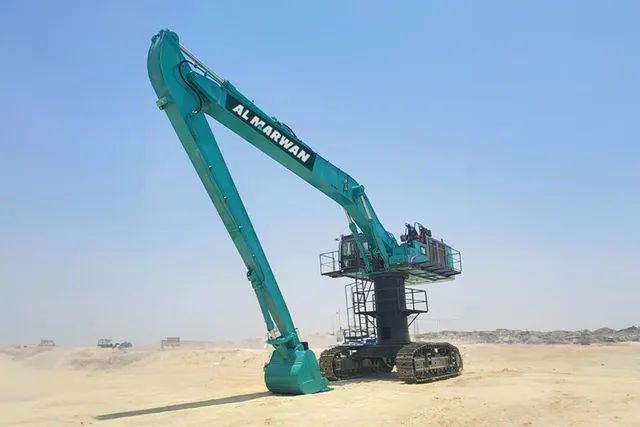
  • Large & Long-Reach Excavators (30–50+ Tons): * Daily: AED 2,500 – AED 4,500
    • Monthly: AED 26,000 – AED 75,000+
    • Best for: Deep excavation, marine work (long-reach up to 32m), and quarrying.

Leading Rental Providers in Dubai & Sharjah

The market is anchored by several tier-one companies known for their vast fleets and 24/7 technical support:

  • Al Marwan Machinery (Sharjah): One of the largest fleets in the GCC. They specialize in Kobelco and Caterpillar units, including specialized long-boom excavators (up to 32m) and high-capacity mining units.
  • Big Crane (Dubai Industrial City): A major provider for Dubai-based projects, offering a diverse fleet from minis to heavy demolition excavators with 24/7 breakdown support.
  • Al Shirawi Machinery: The primary source for Hyundai excavators. They are highly regarded for their "Plant Hire" division, which offers both short-term and long-term specialized leasing.
  • EquipmentsFinder (Sharjah/Dubai): An excellent B2B marketplace and rental provider that offers transparent, "On-Call" pricing for various brands like Komatsu and Volvo.
  • Top Notch Equipment Rental (Dubailand): Focuses on "Smart Fleet" solutions, providing excavators with various attachments like hydraulic breakers, augers, and grapples.

Critical 2026 Compliance & Requirements

Before signing a rental agreement, ensure your provider meets the 2026 UAE safety standards:

  1. Digital TPI Certificate: All excavators must have a valid Third-Party Inspection certificate. In 2026, these are verified via QR code by site safety officers to ensure the machine is fit for duty.
  2. Certified Operators: If opting for "Wet Hire," ensure the operator has a valid Dubai Municipality (DM) or Occupational Safety and Health (OSHAD) card.
  3. Telematics Access: Most premium rentals now include access to a live dashboard. This allows you to monitor the fuel efficiency and idle time of the rented machine, helping you cut down on "ghost costs."

Strategic Tips for Renting

  • The Mobilization Fee: Always account for the cost of transport. Moving a 20-ton crawler to a site in Sharjah Industrial Area 13 or Jebel Ali can add AED 1,000 to AED 2,500 to your initial invoice.
  • Attachment Versatility: If your project involves rock breaking, ask for an "Excavator with Breaker" package upfront; adding attachments later can be more expensive.

Check the Undercarriage: For long-term rentals, inspect the tracks. Excessive wear can lead to downtime, which, despite being the rental company's responsibility, still delays your project.

Tuesday, February 25, 2025

Economics of Rent Excavator: Cost-Effective Solutions

The Economics of Rent Excavator: A Cost-Effective Choice for Construction


Excavators are indispensable in the construction and earthmoving industries, enabling efficient digging, lifting, and site preparation. However, the cost of purchasing these machines can be prohibitively high, particularly for small to mid-sized contractors. This is where the option to rent excavator becomes an economically viable alternative. Renting allows businesses to access high-performance equipment without the financial burden of ownership, providing flexibility and cost savings that improve project efficiency. In this article, we’ll explore the economic benefits of renting an excavator, key cost considerations, and how businesses can maximize returns by opting for rental solutions.

The Cost Dynamics of Renting vs. Buying

One of the primary economic advantages of choosing to rent excavator over purchasing is the substantial reduction in upfront costs. Buying an excavator involves a significant capital expenditure, often ranging from tens of thousands to hundreds of thousands of dollars, depending on the model and specifications. In contrast, renting provides access to the same machinery at a fraction of the price, enabling contractors to allocate their capital to other business needs such as labor, materials, and operational expenses.

Additionally, depreciation is a major financial factor in equipment ownership. A newly purchased excavator begins to lose value the moment it is used, with resale prices diminishing over time. Renting eliminates concerns about depreciation, allowing businesses to use up-to-date machinery without worrying about declining asset value. This is particularly beneficial for short-term projects, where equipment may not be needed after a specific period.

Operational Cost Considerations

Beyond the initial cost of acquisition, excavator ownership comes with ongoing expenses, including maintenance, storage, insurance, and transportation. Regular servicing, part replacements, and unexpected repairs can add up significantly over time. When opting to rent excavator, maintenance and repairs are typically handled by the rental provider, eliminating unpredictable costs and reducing downtime. This ensures that contractors can focus on completing projects efficiently without disruptions caused by mechanical issues.

Storage and transportation also contribute to ownership expenses. Storing an excavator requires space, which might necessitate additional real estate costs, particularly in urban areas. Transporting a large machine between job sites can be costly and logistically complex. Rental companies often offer delivery and pickup services, eliminating the hassle of transportation logistics and further improving cost efficiency.

Financial Flexibility and Cash Flow Management

For many construction firms, financial flexibility is crucial to maintaining a steady cash flow. Purchasing heavy equipment outright ties up capital that could be used for payroll, project investments, or business expansion. Renting allows companies to manage their cash flow more effectively, paying for equipment only when needed rather than committing to a long-term financial burden.

Additionally, rental expenses can often be deducted as operational costs, providing tax advantages for businesses. This differs from equipment ownership, where depreciation schedules may not offer immediate financial relief. By choosing to rent excavator, businesses can optimize their financial planning while keeping liquidity intact for unforeseen expenses or new opportunities.

Project-Specific Equipment Needs

Different projects require different types of excavators, and renting offers the flexibility to choose the right machine for each job. Instead of purchasing a single excavator and attempting to use it for a variety of tasks, contractors can rent specialized models such as mini excavators for confined spaces or long-reach excavators for deep digging applications. This ensures that the most efficient equipment is used for each project, leading to improved productivity and cost-effectiveness.

Seasonal demand fluctuations further highlight the benefits of renting. Some construction companies experience varying workloads throughout the year, making it impractical to own an excavator that sits idle during off-peak seasons. Renting allows businesses to scale their equipment needs up or down as required, ensuring that costs align with revenue-generating activities.

How to Maximize Savings When Renting an Excavator

While renting is generally more cost-effective than buying for many contractors, there are still ways to maximize savings and improve economic efficiency:

  1. Compare Rental Rates – Different rental providers offer varying pricing structures, so researching multiple suppliers can help secure the best deal.

  2. Opt for Long-Term Rentals When Needed – If an excavator is required for an extended period, negotiating long-term rental rates can result in significant discounts.

  3. Plan Ahead – Booking equipment in advance can help avoid last-minute availability issues and premium pricing.

  4. Use Equipment Efficiently – Proper operator training and efficient scheduling can minimize idle time, ensuring that rental costs translate directly into productivity.

  5. Understand Rental Terms – Reviewing contract terms, including maintenance coverage, insurance requirements, and usage limits, helps avoid unexpected fees.


The decision to rent excavator instead of purchasing one outright is a financially sound strategy for many businesses. By reducing upfront costs, eliminating depreciation concerns, and offering flexibility in equipment selection, renting ensures that contractors can complete projects efficiently without overextending their budgets. With the added benefits of maintenance-free operations, improved cash flow management, and tax advantages, renting excavators continues to be a cost-effective solution in the construction industry. As market demands evolve, renting remains a practical and economically viable choice for companies looking to stay competitive while managing resources effectively.

Monday, February 17, 2025

Komatsu Excavators and the GCC Market

 A PC2000 Komatsu excavator on display

Why Komatsu Excavators Fit the GCC Market

The Gulf Cooperation Council (GCC)—comprising the UAE, Saudi Arabia, Qatar, Kuwait, Oman, and Bahrain—has one of the fastest-growing construction and infrastructure markets in the world. From towering skyscrapers and extensive road networks to sprawling industrial projects, the demand for reliable and high-performance heavy machinery is at an all-time high. Komatsu excavators have established themselves as a preferred choice in this region, offering durability, efficiency, and cutting-edge technology that aligns perfectly with the challenging terrain and extreme climate conditions of the GCC.

The Growth of the GCC Construction Sector

A Booming Market for Heavy Machinery

The GCC region is undergoing rapid transformation, with multi-billion-dollar infrastructure projects shaping the skyline. Mega-developments like NEOM in Saudi Arabia, Expo City in Dubai, and Hamad International Airport expansions in Qatar demand world-class machinery. Construction firms need equipment that can handle long operational hours, extreme heat, and demanding workloads, making the Komatsu excavator a go-to choice for reliability and performance.

Key Sectors Driving Demand for Excavators

  1. Oil and Gas – Excavators play a crucial role in site preparation for pipelines, refineries, and drilling operations.

  2. Urban Development – With cities expanding rapidly, Komatsu excavators are essential for excavation, foundation work, and infrastructure development.

  3. Mining and Quarrying – The GCC has rich natural resources, and excavators are indispensable for mineral extraction and quarry operations.

  4. Road and Bridge Construction – Massive investments in highways, tunnels, and bridges fuel the demand for heavy-duty excavators.

Why Komatsu Excavators Lead the GCC Market

1. Built for Extreme Conditions

GCC construction sites experience harsh desert climates, with temperatures exceeding 50°C (122°F) in peak summers. Komatsu’s advanced cooling systems, high-quality hydraulic systems, and robust components ensure uninterrupted operation in these extreme conditions.

2. Fuel Efficiency and Cost Savings

With rising fuel costs, fuel-efficient excavators are essential. Komatsu integrates Hybrid Technology in select models, significantly reducing fuel consumption and carbon emissions. This is a game-changer for contractors looking to cut operational expenses.

3. Smart Construction Technology

Komatsu’s SMARTCONSTRUCTION and ICT-enabled excavators provide advanced automation, real-time monitoring, and machine-learning capabilities. These innovations help operators increase accuracy, improve productivity, and reduce downtime.

4. Reliability and Low Maintenance

Komatsu excavators are known for their durability and long service life, requiring less frequent repairs compared to other brands. With an extensive dealer network in the GCC, spare parts and servicing are readily available.

5. Operator Comfort and Safety

GCC construction firms prioritize operator safety and efficiency. Komatsu excavators feature ergonomic cabins, enhanced visibility, and vibration-reducing designs, ensuring higher productivity and reduced operator fatigue in long working hours.

Popular Komatsu Excavator Models in the GCC

1. Komatsu PC200-8 (20-Ton Excavator)

  • Ideal for: General construction, infrastructure projects.

  • Why it’s popular: Fuel-efficient, powerful, and easy to operate.

2. Komatsu PC400-8 (40-Ton Excavator)

  • Ideal for: Large-scale earthmoving and mining operations.

  • Why it’s popular: High digging force, durable undercarriage, and advanced hydraulics.

3. Komatsu PC850-8EO (85-Ton Excavator)

  • Ideal for: Quarrying, mining, and heavy-duty applications.

  • Why it’s popular: Massive capacity, powerful engine, and superior stability.

Komatsu Excavators vs. Competitors in the GCC

While brands like Caterpillar, Hitachi, and Volvo are also present in the GCC, Komatsu stands out due to:

  • Superior Fuel Efficiency – Lower operating costs over time.

  • Advanced Telematics – KOMTRAX system provides remote monitoring for better fleet management.

  • Better Heat Resistance – Optimized for the region’s harsh climate.

  • Wide Dealer Network – Easy access to spare parts and technical support.

Future Trends for Komatsu Excavators in the GCC

1. Increased Demand for Hybrid and Electric Excavators

Governments in the GCC are pushing for sustainability initiatives, making hybrid and electric excavators an attractive option for future projects.

2. Autonomous and AI-Driven Machinery

With the rise of AI and automation, Komatsu’s self-operating excavators will gain traction, reducing labor costs and increasing efficiency.

3. Integration with Smart Cities

As Saudi Arabia, UAE, and Qatar push for smart city initiatives, Komatsu’s IoT-enabled excavators will play a crucial role in data-driven construction management.

Wrap up

The GCC market’s booming construction industry requires robust, efficient, and technologically advanced machinery. The Komatsu excavator has proven to be a market leader, offering high durability, smart automation, and superior fuel efficiency—critical features for success in the region’s demanding conditions.

As projects grow in scale and complexity, investing in Komatsu excavators remains a smart choice for construction firms looking for long-term reliability and operational excellence in the GCC.


Wednesday, November 13, 2024

10 Reasons to Choose a Kobelco Crawler Crane for Your Next Project

 Top Reasons to Buy Kobelco Crawler Crane for Superior Performance, Stability, and Efficiency on Your Next Project.


Kobelco is a renowned brand in the heavy machinery industry, known for producing high-performance cranes that offer reliability, precision, and innovation. Among its vast range of equipment, Kobelco crawler cranes stand out as some of the most powerful and versatile cranes available for large-scale construction, industrial, and infrastructure projects. These cranes are built for heavy lifting, with advanced features that make them an ideal choice for demanding work environments. Here are ten reasons why choosing a Kobelco crawler crane could be the best decision for your next project.

1. Unmatched Lifting Capacity

Kobelco crawler cranes are engineered to lift massive loads with ease. With lifting capacities ranging from 50 tons to over 1,000 tons, these cranes are designed to handle even the heaviest lifting tasks. Whether you're working on a high-rise construction site, erecting wind turbines, or installing heavy equipment, Kobelco crawler cranes have the muscle to get the job done.

2. Advanced Hydraulic Technology

Kobelco's use of advanced hydraulic technology is one of the key features that sets its crawler cranes apart. The cranes are equipped with powerful hydraulic systems that deliver exceptional lifting performance while ensuring smooth and precise control. This technology also improves fuel efficiency and reduces maintenance costs, allowing for longer operational hours and more productive workdays.

3. Superior Stability and Safety

Crawler cranes are designed with large, durable tracks that provide superior stability and balance on uneven or rough terrain. Kobelco’s crawler cranes, in particular, are known for their excellent weight distribution and high stability even when lifting at maximum capacity. Additionally, safety features like advanced anti-sway systems, load moment indicators, and automatic leveling systems ensure that operators can work confidently and minimize the risk of accidents.

4. Improved Fuel Efficiency

Fuel consumption is a critical factor in the cost-effectiveness of any piece of heavy machinery. Kobelco crawler cranes incorporate fuel-efficient engines and hydraulic systems, reducing the amount of fuel required to perform heavy lifts. This not only lowers operational costs but also makes these cranes more environmentally friendly, which is an important consideration in today’s construction landscape.

5. Enhanced Maneuverability

Kobelco crawler cranes are designed with excellent maneuverability in mind. Their compact size and advanced control systems allow them to easily navigate tight spaces and work in areas with limited access. Whether you're working in an urban environment with narrow streets or on a busy construction site, Kobelco cranes offer the flexibility needed to get the job done efficiently.

6. Durability and Longevity

Kobelco crawler cranes are built to last, with high-quality components and materials that can withstand the toughest working conditions. These cranes are known for their long lifespan, making them a great investment for construction companies looking for reliable and durable equipment. Regular maintenance and care ensure that Kobelco cranes continue to perform at their best for many years, minimizing downtime and maximizing productivity.

7. User-Friendly Operation

Operating a Kobelco crawler crane is straightforward, thanks to its user-friendly control systems. The intuitive interface, combined with advanced automation, makes it easy for crane operators to manage complex lifting tasks. Additionally, the cranes’ advanced monitoring systems provide real-time feedback on performance, helping operators make quick adjustments and optimize efficiency on the job site.

8. Versatility for Different Applications

One of the major advantages of Kobelco crawler cranes is their versatility. They are ideal for a wide range of applications, from construction and infrastructure projects to offshore and industrial installations. The crane’s flexibility in handling various attachments, such as lifting beams, hooks, and winches, allows for diverse operations, making it a multi-purpose tool for all types of heavy lifting.

9. Reduced Maintenance and Operating Costs

Kobelco crawler cranes are designed for low maintenance and reduced downtime. With robust engineering, advanced diagnostic systems, and easy-to-access components, maintenance becomes quicker and more affordable. This not only helps reduce operating costs but also ensures that the crane remains in top condition, minimizing the chances of expensive repairs or unexpected breakdowns.

10. Proven Global Reputation

Kobelco has built a strong global reputation for producing top-quality machinery that consistently delivers reliable performance. Their crawler cranes have been used in some of the world’s largest and most challenging projects, from skyscrapers to infrastructure works. This proven track record gives companies confidence that they’re investing in a crane that will stand up to the demands of their project and deliver exceptional results.


Kobelco crawler cranes are powerful, reliable, and efficient machines that excel in heavy lifting and complex construction tasks. With unmatched lifting capacity, advanced hydraulic technology, superior stability, and a reputation for durability, these cranes provide excellent value for construction and industrial companies. Their versatility, fuel efficiency, and ease of operation make them an excellent choice for a wide range of projects. Whether you're lifting heavy components, working in difficult terrain, or trying to minimize operational costs, a Kobelco crawler crane offers the performance and reliability you need to complete your next project successfully.


Thursday, November 7, 2024

What to Look for When Renting a Crawler Crane

 Essential Tips to Rent a Crawler Crane: Key Features, Site Needs, and Support for a Smooth Construction Project


When planning a construction project that demands significant lifting power, renting a crawler crane can be a smart solution. These machines are built for stability and strength, handling rough terrain and heavy loads with ease. However, selecting the right crawler crane requires a bit of know-how, as each crane offers different capabilities that could impact your project's efficiency and safety. Here’s a guide to the key factors to consider when renting a crawler crane.

1. Lifting Capacity

The primary criterion for choosing any crane is its lifting capacity, which dictates how much weight it can safely handle. Crawler cranes come in a range of capacities, typically from 50 tons up to 300 tons or more. It's essential to have a clear understanding of the heaviest loads you’ll need to lift on-site. It’s also wise to select a crane with a capacity slightly higher than your heaviest load to provide a margin of safety.

2. Boom Length and Reach

The boom length of a crawler crane defines its maximum lifting height, while its reach indicates how far it can extend horizontally. Both are crucial factors in planning the crane’s placement and how it will maneuver loads across the work site. Consider if the crane will need to work around obstacles or lift materials to significant heights. Some crawler cranes also offer telescoping or lattice booms, allowing you to adjust the length for added flexibility on complex job sites.

3. Terrain and Site Conditions

Crawler cranes are known for their stability, particularly on rough and uneven ground, thanks to their wide, stable tracks. However, it’s still essential to assess the specific conditions of your job site. If the terrain is particularly rugged or muddy, choose a crane with extra-sturdy tracks that can handle challenging surfaces without sinking or slipping. Additionally, make sure the crane’s weight is suitable for your site—overly heavy cranes might need reinforced ground support or mats to prevent sinking.

4. Operational Features

Modern crawler cranes come equipped with advanced safety and operational features, enhancing both efficiency and operator comfort. Look for cranes with load-sensing technology, which automatically adjusts hydraulic pressure to ensure a smooth, controlled lift. An energy-efficient engine is also valuable, reducing fuel consumption while maintaining strong performance. Safety features such as overload indicators, anti-two-block systems, and emergency stop functions are essential, especially if your project requires precision lifting in confined spaces.

5. Ease of Transport and Setup

Crawler cranes, while versatile, can be challenging to transport due to their large size and weight. It’s beneficial to select a model with modular components, which can be broken down for easier transport and reassembled quickly on-site. Additionally, some cranes are designed for faster setup, minimizing downtime and labor costs. Verify with the rental company if they provide assembly and disassembly services or if your crew will need specialized training to set up the crane efficiently.

6. Cab Comfort and Control Systems

Since operators are often in the cab for long hours, comfort and ease of use are essential. Look for crawler cranes with ergonomic seating, climate control, and adjustable controls for operator comfort. Intuitive control systems and clear visibility are also crucial for safe and efficient operation, reducing fatigue and enhancing precision when handling heavy loads. Newer models often feature touchscreen interfaces and remote monitoring, allowing operators to keep track of lift metrics and make adjustments as needed.

7. Rental Company Support and Maintenance

Working with a reputable rental company is as important as choosing the right machine. Look for a company that offers comprehensive support, including on-site maintenance and troubleshooting. Crawler cranes have complex mechanical and hydraulic systems that require regular upkeep, so having access to quick, expert service can prevent costly delays. Ensure the company provides well-maintained equipment and inquire about their response time in case of mechanical issues.

8. Rental Terms and Flexibility

Lastly, review the rental terms carefully. Construction timelines can shift, so it’s wise to rent from a provider with flexible terms, allowing you to extend the rental period if needed. Check for any hidden fees related to transportation, setup, or overtime. By understanding the full terms upfront, you can manage costs more effectively and avoid unexpected charges.


Renting the right crawler crane can significantly impact the success of your project, enhancing safety, efficiency, and productivity on-site. By evaluating your lifting needs, site conditions, and operator requirements, you can choose a crane that’s perfectly suited to your project’s demands. With the right machine and reliable rental support, you’re set up for success on even the most challenging construction jobs.


Wednesday, September 11, 2024

Heavy Machinery: Building Green Energy for Net-Zero

How cranes, excavators, and more power renewable projects worldwide

How cranes, excavators, and more power renewable projects worldwide

The global push toward achieving net-zero emissions has brought green energy projects to the forefront of construction and infrastructure development. Renewable energy sources like wind, solar, hydroelectric, and geothermal power are essential to curbing carbon emissions and ensuring a sustainable future. While the focus tends to be on the technology powering these projects, the unsung heroes behind their construction are the heavy machinery that makes these ambitious undertakings possible.

Without the reliable and efficient performance of specialized equipment, building the infrastructure for renewable energy would be a slow and inefficient process. Here’s how heavy machinery is crucial to turning green energy projects into reality, accelerating the transition to a more sustainable world.

1. Wind Energy: Cranes and Transporters at Work

One of the most prominent sources of renewable energy, wind power, requires massive infrastructure to capture energy from the atmosphere. Wind turbines, often towering over 100 meters in height, cannot be erected without the help of specialized cranes.

Crawler cranes, for instance, play a pivotal role in the construction of wind farms, hoisting turbine blades and nacelles into position. These components are enormous, with some turbine blades exceeding 60 meters in length. Lifting them safely and efficiently requires cranes with exceptional lifting capacity and reach, such as the Kobelco CKS3000 crawler crane.

Moreover, transporters are essential for moving large turbine parts from manufacturing facilities to remote locations where wind farms are often built. Heavy-duty trailers can carry turbine towers, blades, and nacelles, navigating tough terrains that other vehicles simply cannot manage.

2. Solar Energy: Earthmovers and Piling Machines Lay the Groundwork

Solar farms, especially large-scale ones, demand expansive areas of flat land for the installation of photovoltaic (PV) panels. To prepare these areas, earthmoving machines such as bulldozers, excavators, and graders are crucial. They clear the land, remove obstructions, and ensure the ground is level for efficient panel installation.

Excavators also play an integral role in trenching for cable laying and site drainage, both of which are key to the functioning of a solar farm. Additionally, pile drivers are used to install the supporting structures that hold the solar panels in place. These machines drive posts deep into the ground, ensuring stability and longevity, even in regions with challenging soil conditions.

3. Hydroelectric Projects: Massive Excavation and Dam Construction

Hydroelectric power, which relies on the energy of flowing water, has been a reliable renewable energy source for decades. Constructing hydroelectric dams, however, is a monumental task that calls for the most advanced heavy machinery.

Hydraulic excavators, bulldozers, and rock trucks are essential for creating reservoirs and building dams. These projects often require extensive excavation to divert rivers and create space for reservoirs. For instance, massive hydraulic crawler excavators are used to remove large volumes of earth and rock efficiently. Once the site is prepared, concrete pumps play a critical role in building the dam's structure, allowing for the precise pouring of concrete at large scales.

4. Geothermal Power: Drill Rigs for Heat Extraction

Geothermal energy, which taps into the Earth’s natural heat, involves drilling deep wells to access hot water and steam reservoirs. Specialized drill rigs are needed to reach depths where geothermal energy can be harnessed. These rigs are capable of boring through tough rock layers and must operate with precision to avoid damaging delicate underground formations.

Heavy machinery like rotary drill rigs and hydraulic drilling machines can penetrate deep into the earth’s crust, creating wells that are crucial for the success of geothermal power plants. The accuracy and strength of these machines allow for the extraction of heat energy, which can then be converted into electricity with minimal environmental impact.

5. Offshore Energy: Barges, Cranes, and Jack-Up Rigs

For offshore wind farms and tidal energy projects, heavy machinery has to overcome the challenges of working in open water. Offshore construction requires the use of floating cranes, jack-up rigs, and specialized barges capable of installing wind turbines, tidal turbines, and other infrastructure in harsh ocean environments.

Cranes with extended reach and high lifting capacities are necessary to position turbine components on the seabed. Jack-up rigs provide stable platforms for workers and equipment, ensuring that the installation process is both safe and efficient. These machines enable offshore projects to be completed faster, bringing green energy to the grid without unnecessary delays.


The global shift to green energy is not just about harnessing wind, water, sun, and geothermal heat. It’s about building the infrastructure to support these renewable energy sources, and heavy machinery is the foundation of that effort. Cranes, excavators, bulldozers, piling machines, and drill rigs all work in tandem to create the physical structures necessary for the world's renewable energy needs.

As green energy projects continue to expand globally, the role of heavy machinery in these projects will only grow more critical. With the right machines in place, the dream of achieving net-zero emissions becomes increasingly achievable. Heavy machinery makes it possible to construct the renewable energy infrastructure we need to power a cleaner, greener future for all.


cranes


The Rise of Heavy Machinery Rental in the UAE: Powering the Nation's Construction Boom

The United Arab Emirates has long been synonymous with ambitious construction projects, from record-breaking skyscrapers in Dubai to sprawli...